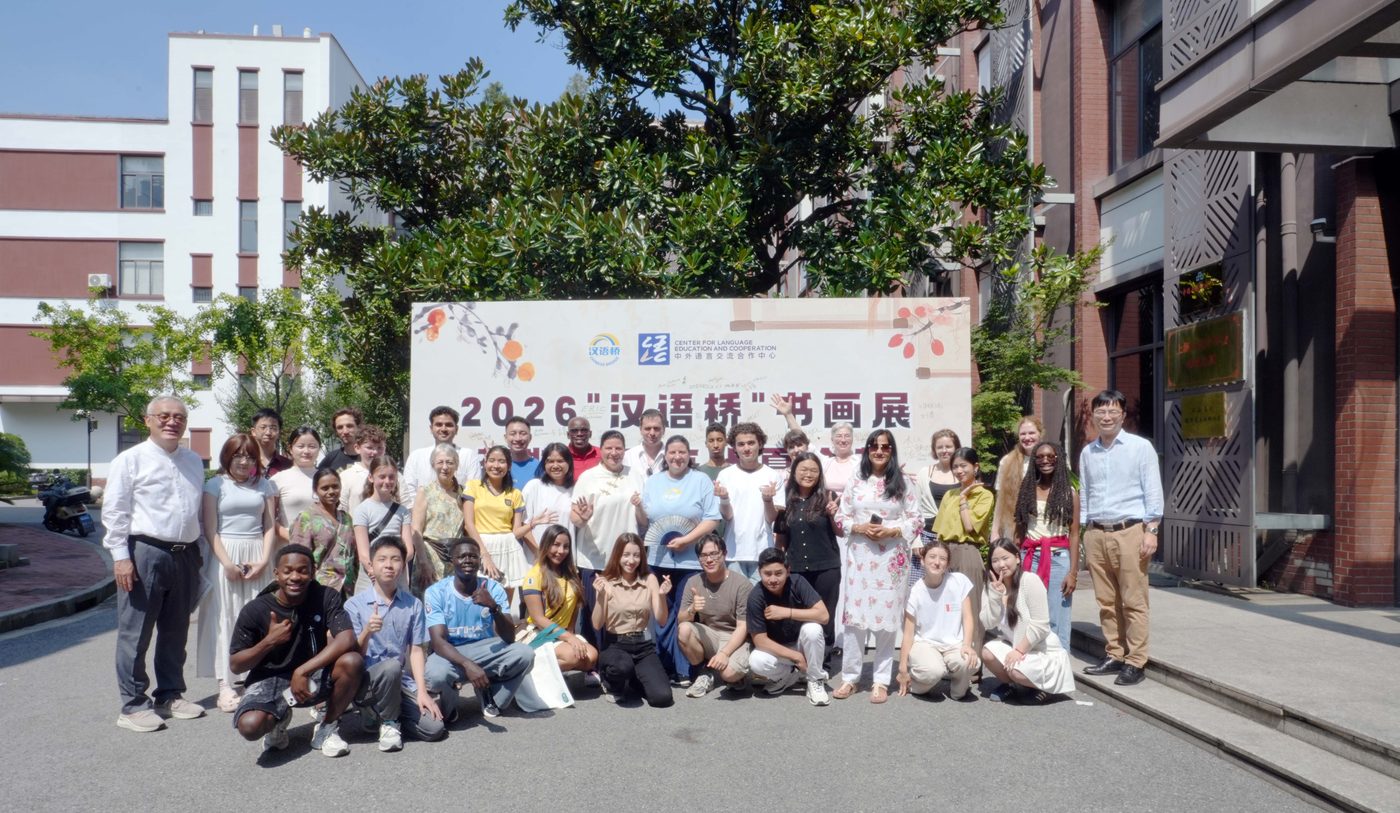
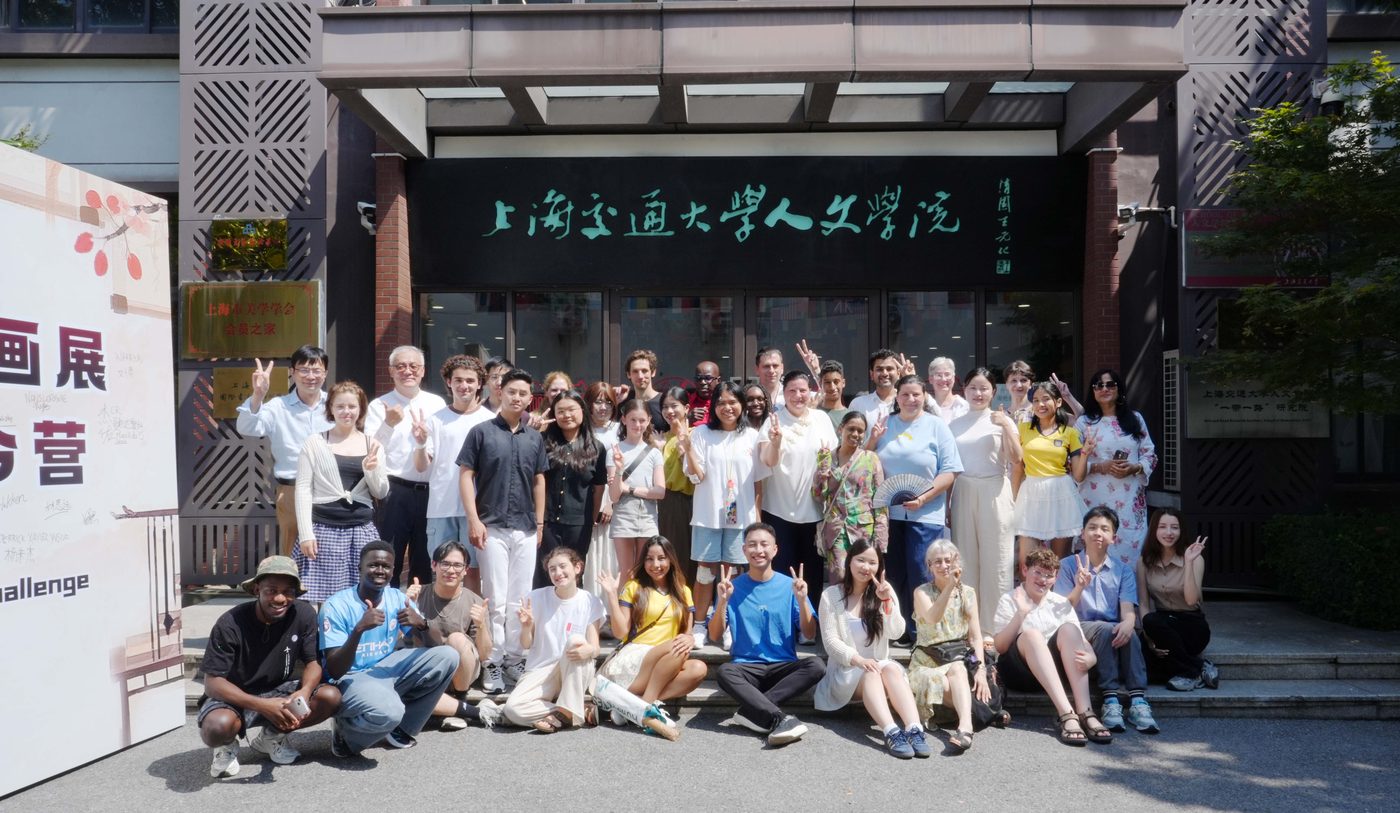
The 2026 Chinese Bridge Summer Camp for Award Winners of Calligraphy and Painting Challenge successfully concluded in Shanghai on August 15, 2026. Hosted by the Center for Language Cooperation and Exchange (CLC) and organized by the School of Humanities at Shanghai Jiao Tong University (SJTU), the fourteen-day program brought together more than 30 award-winning participants from various countries to engage in intensive study of traditional Chinese calligraphy and painting.
Held from August 2 to August 15, the camp served as a platform for systematic artistic refinement and cross-cultural exchange. Participants immersed themselves in classical techniques, visited significant cultural landmarks in the Jiangnan region, and explored the intersection of traditional aesthetics with contemporary technology.
The opening ceremony was held on the morning of August 3 at the School of Humanities, SJTU. Professor Wang Jun, Vice Dean of the School of Humanities, delivered the opening address, welcoming the participants and outlining the university’s commitment to international education in Chinese language and culture. Tenured Professor Zhou Bin presented the curriculum structure. The program was designed to progress logically from the cognition of tools and fundamental brush techniques to complex composition and independent creative practice. Muhammadsolehi Sinozod from Tajikistan, shared his experience of engaging with Chinese art forms. His remarks highlighted how curiosity regarding ink and brush serves as a universal medium for communication, transcending national boundaries.
The core curriculum focused on the distinct yet related techniques of calligraphy and traditional painting. Initial sessions elucidated the core characteristics of each discipline and the precise requirements for traditional stationery. Subsequent training involved comparative analyses of wrist movements and pressure control, enabling participants to identify and correct habits previously formed by intuition alone. Two specialized lectures provided historical and theoretical depth to the technical training. On August 4, the lecture “The Evolution of Chinese Characters: From Oracle Bone Script to Modern Times” traced the morphological changes of Chinese character over more than 3,000 years, including a practical session on writing Oracle Bone Script. On August 6, “The History of Chinese Calligraphy and Painting Art” reviewed the stylistic lineages across different dynasties. In the accompanying practical exercise, participants inscribed the twelve zodiac animals in ancient script on circular paper, juxtaposing historical forms with their own modern Chinese names. A subsequent session on classical works featured stroke-by-stroke analysis by instructors, followed by live writing demonstrations to bridge the gap between theoretical understanding and practical execution.
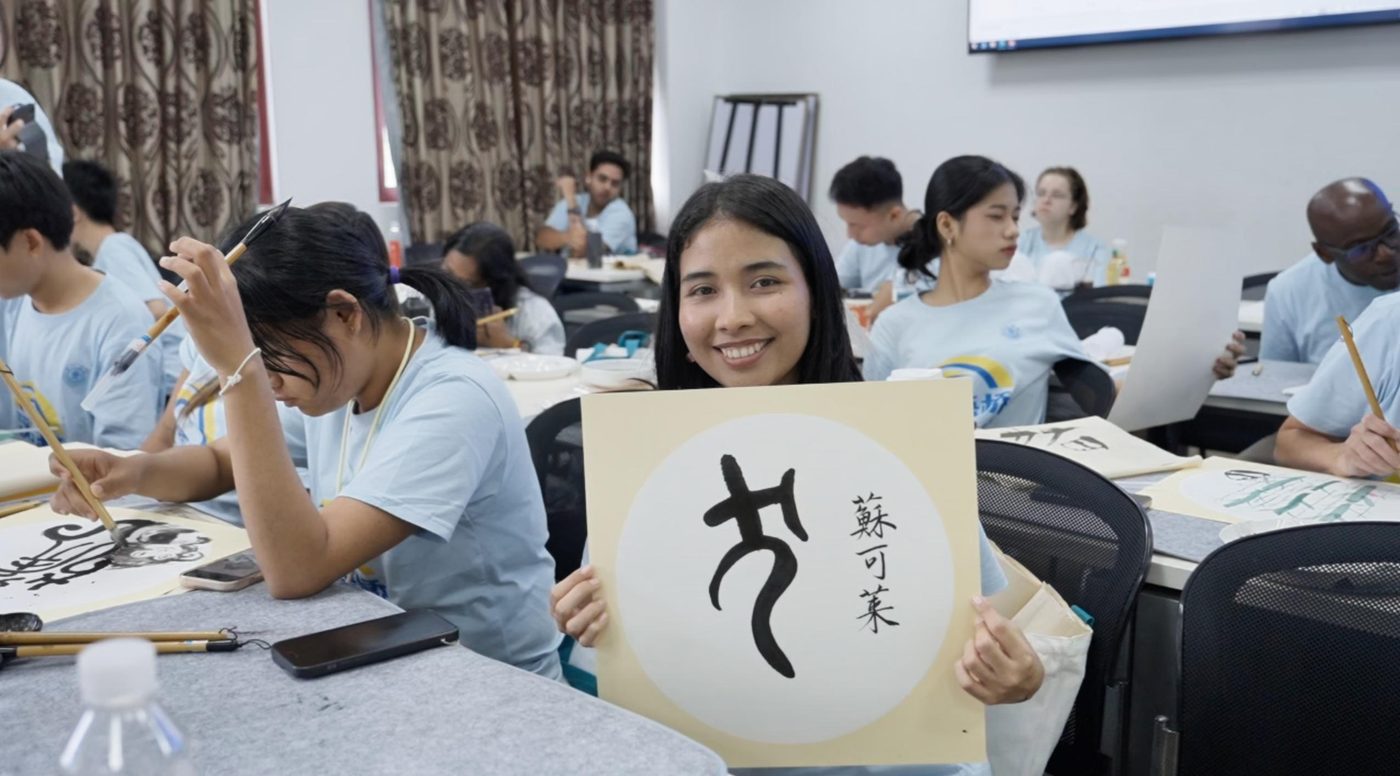
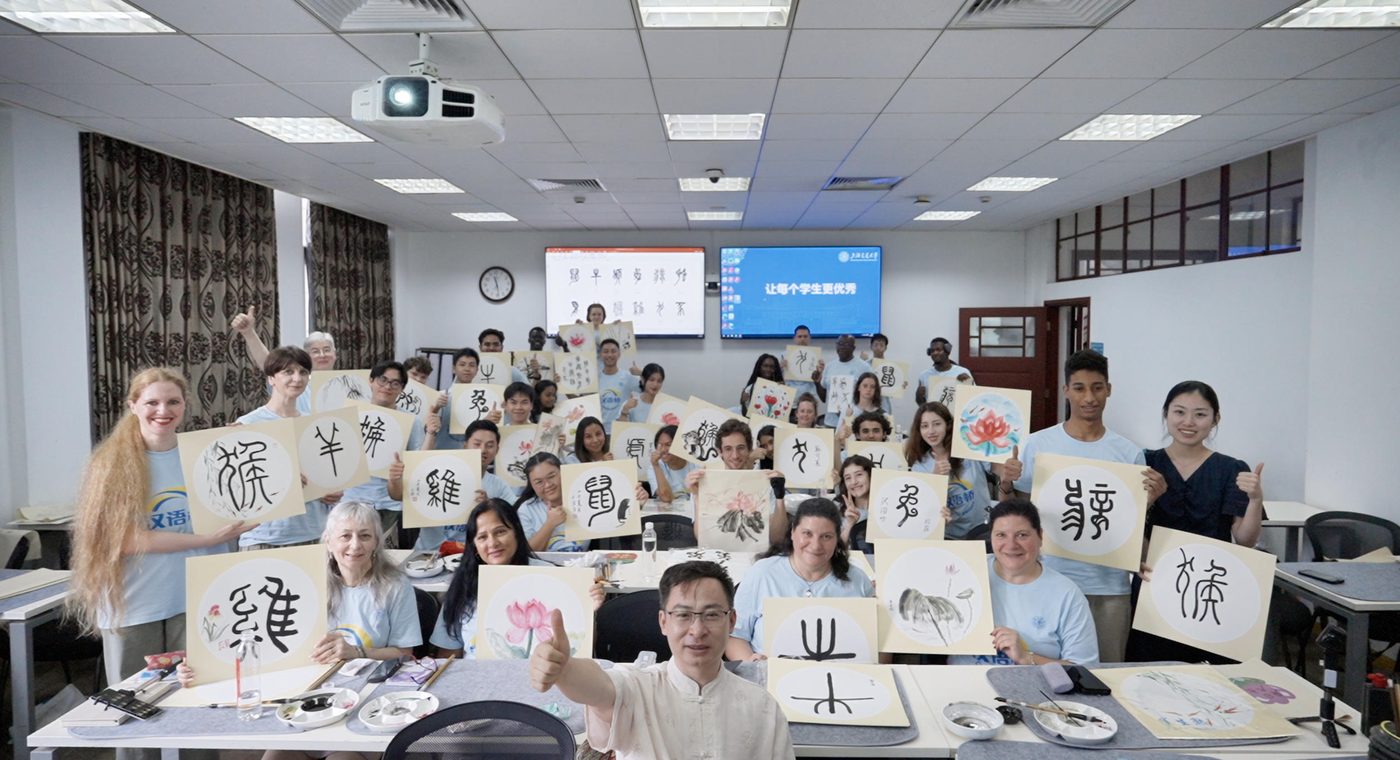
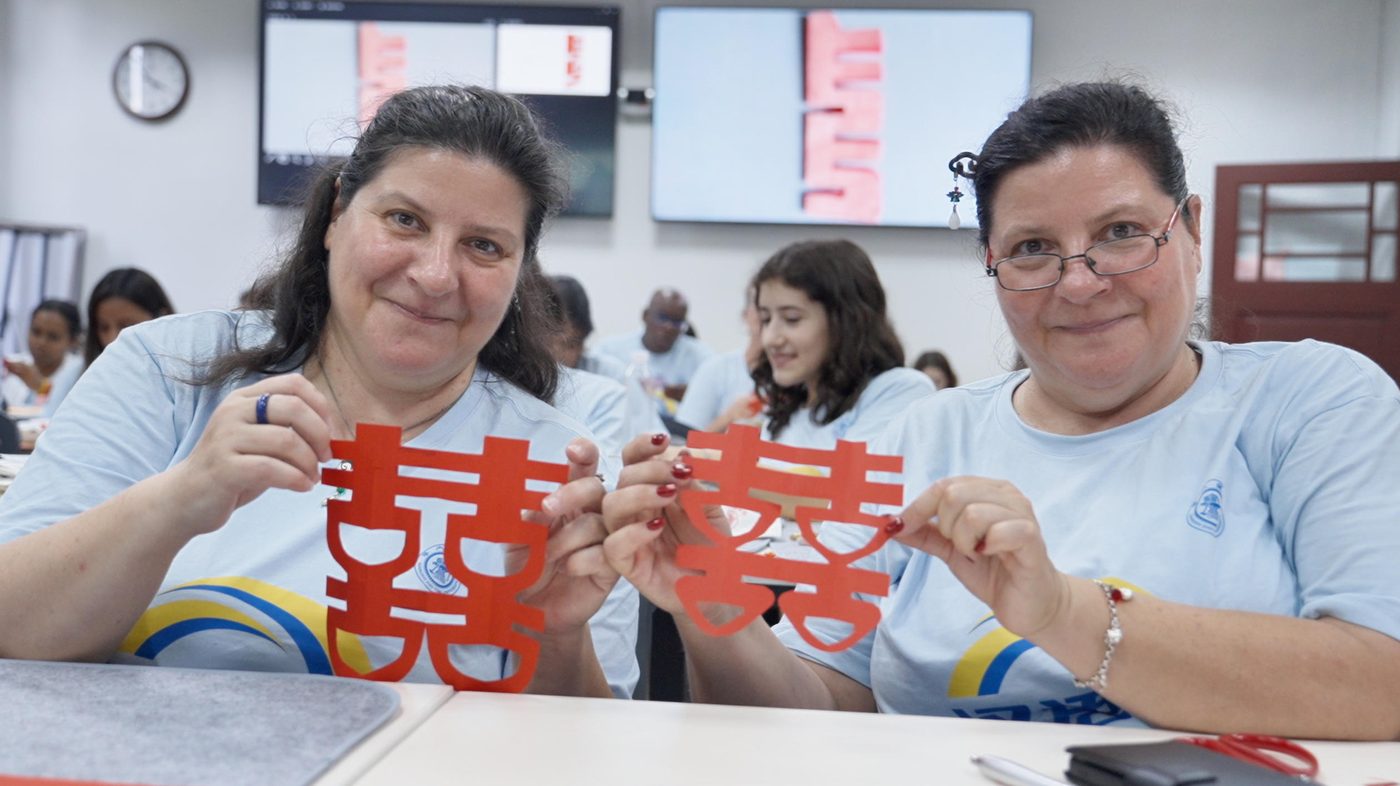
Following a session on imitating classical works on August 10, instructors provided individualized feedback and corrections on August 11, focusing on composition and brushwork precision. On August 13, the program introduced “AI-Integrated Character Composition,” a novel session that integrated modern digital tools into the classroom, demonstrating the potential convergence of ancient ink aesthetics and contemporary technology. Interspersed within the curriculum were two interactive cultural experiences. On August 6, a paper-cutting workshop allowed participants to explore traditional symmetry and craftsmanship, culminating in the creation of the “Double Happiness” symbol. On August 10, participants practiced the ancient technique of ta (rubbing), learning to transfer inscriptions from stone to xuan paper using ink and brush, a method that has preserved calligraphic heritage for millennia.
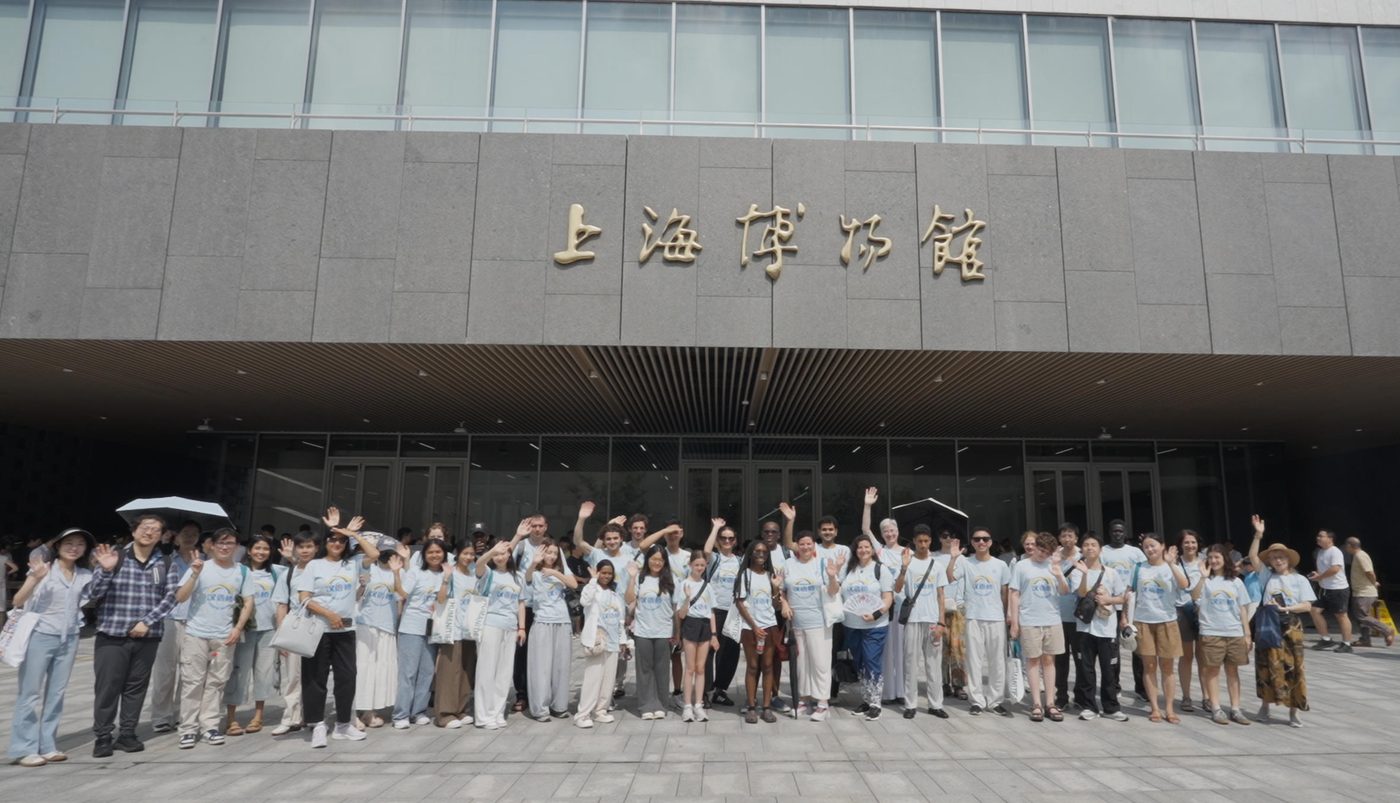
Extending the learning beyond the classroom, the camp incorporated field trips to major cultural sites. On August 5, participants visited the Shanghai Museum to examine authentic masterpieces from various dynasties, gaining tangible context for the “schools” and “styles” discussed in class. They also visited the China Art Museum (Power Station of Art) to view a multimedia adaptation of Along the River During the Qingming Festival, observing the fusion of ancient scroll painting with modern digital media. In the evening, the group toured Yu Garden and the Bund, experiencing the urban landscape’s blend of classical garden design and international architecture.
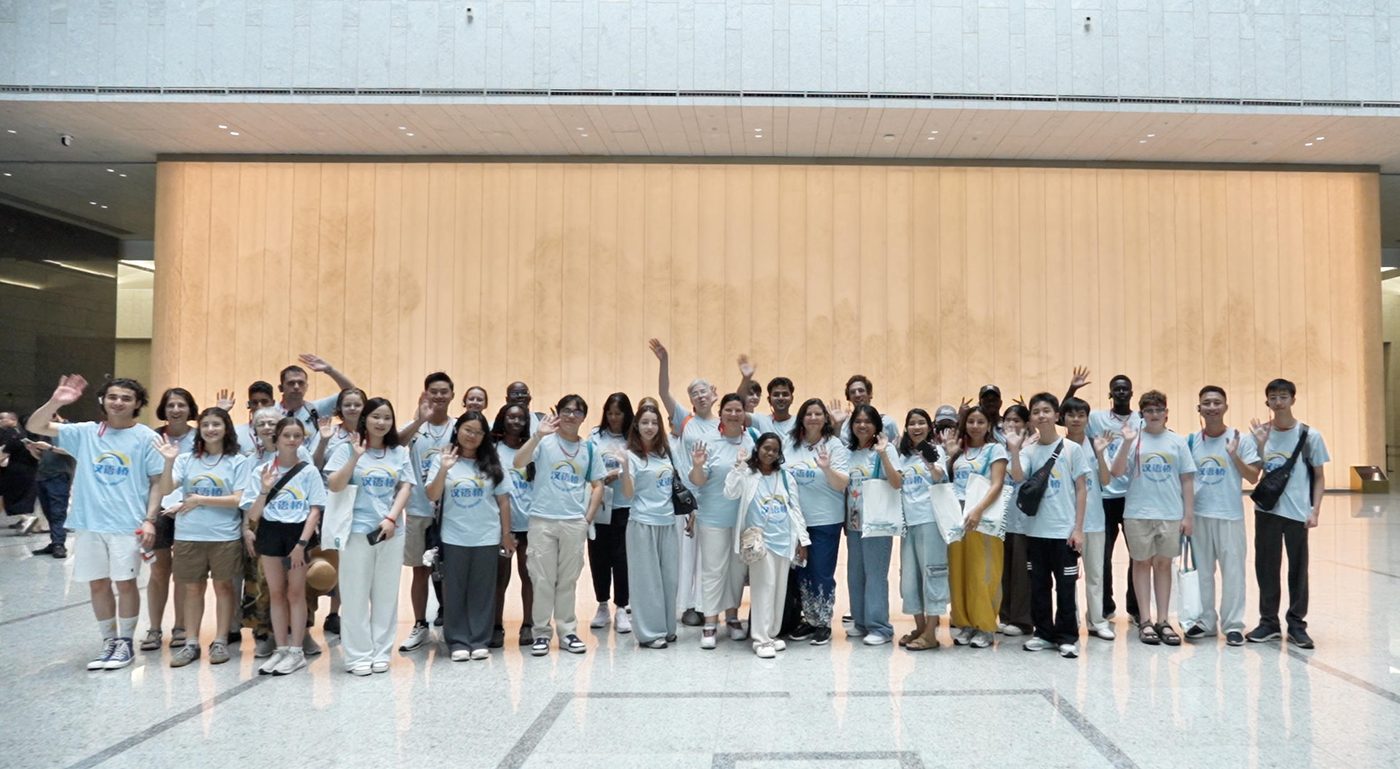
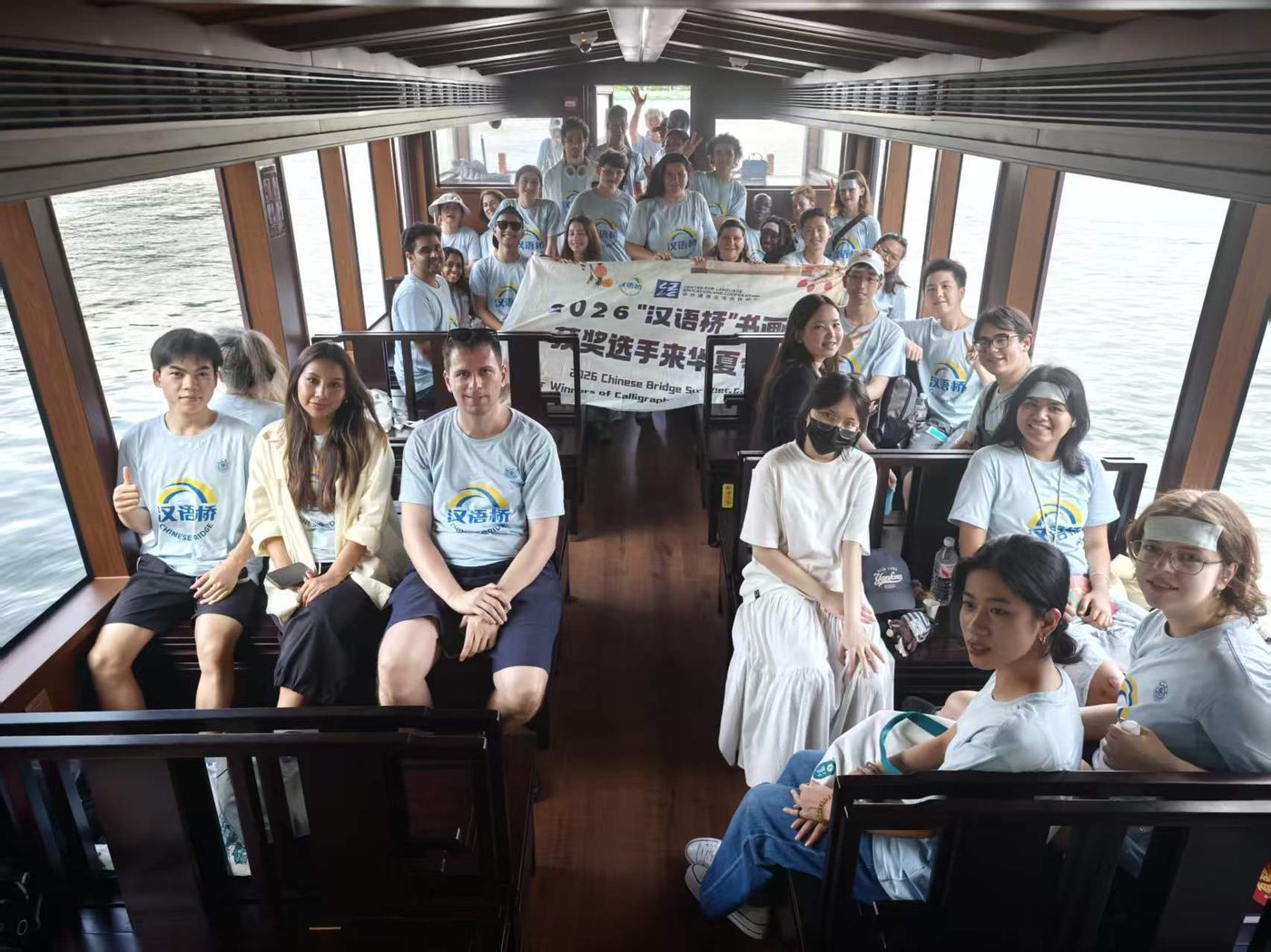
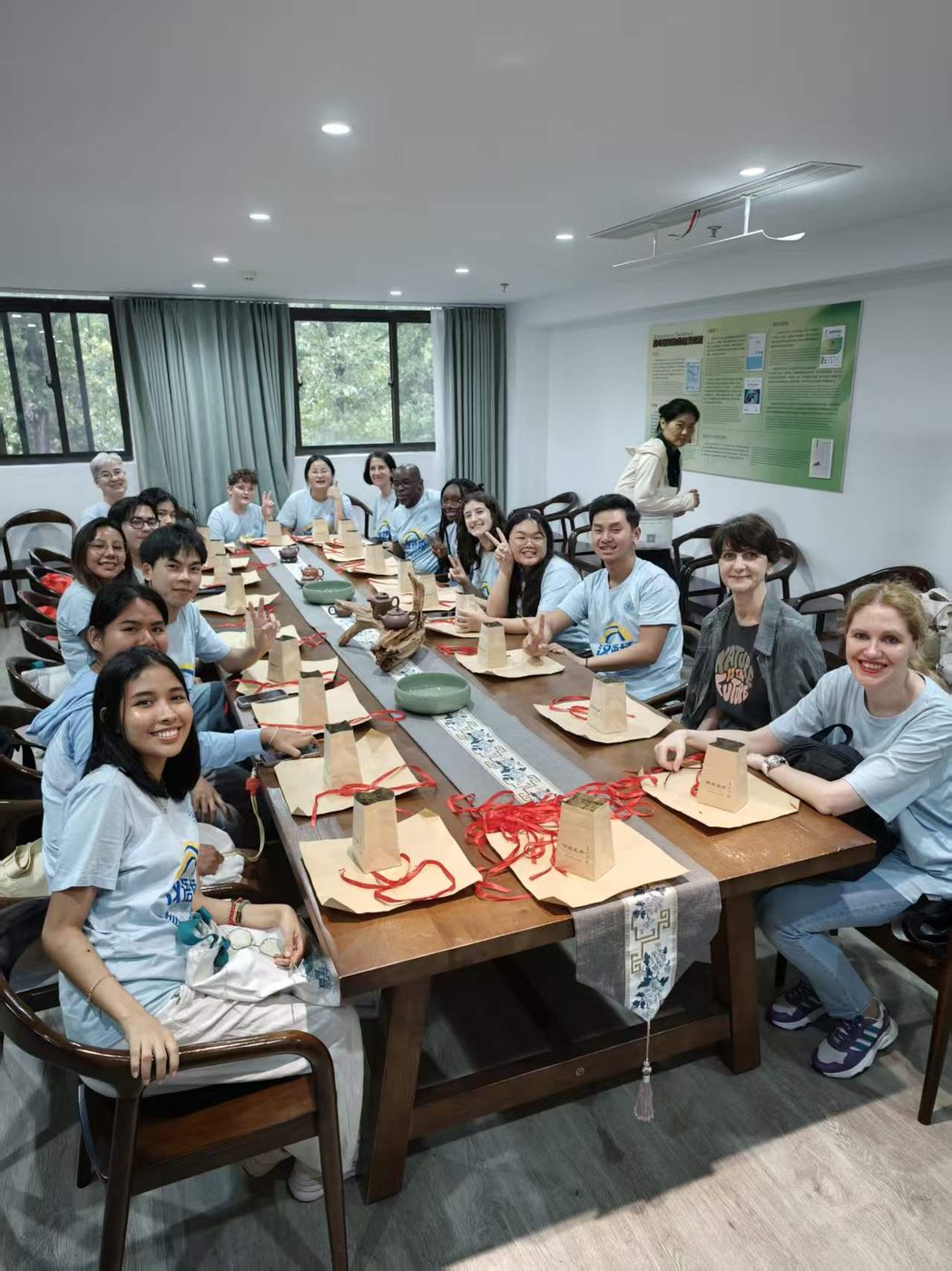
From August 7 to 9, the camp relocated to Hangzhou and Shaoxing. In Hangzhou, participants visited West Lake and the Xiling Art Museum, studying the unique aesthetics of Chinese seal carving and Jiangnan landscape culture. A tea tasting session in a local tea garden further illustrated the aesthetic dimensions of Chinese lifestyle.
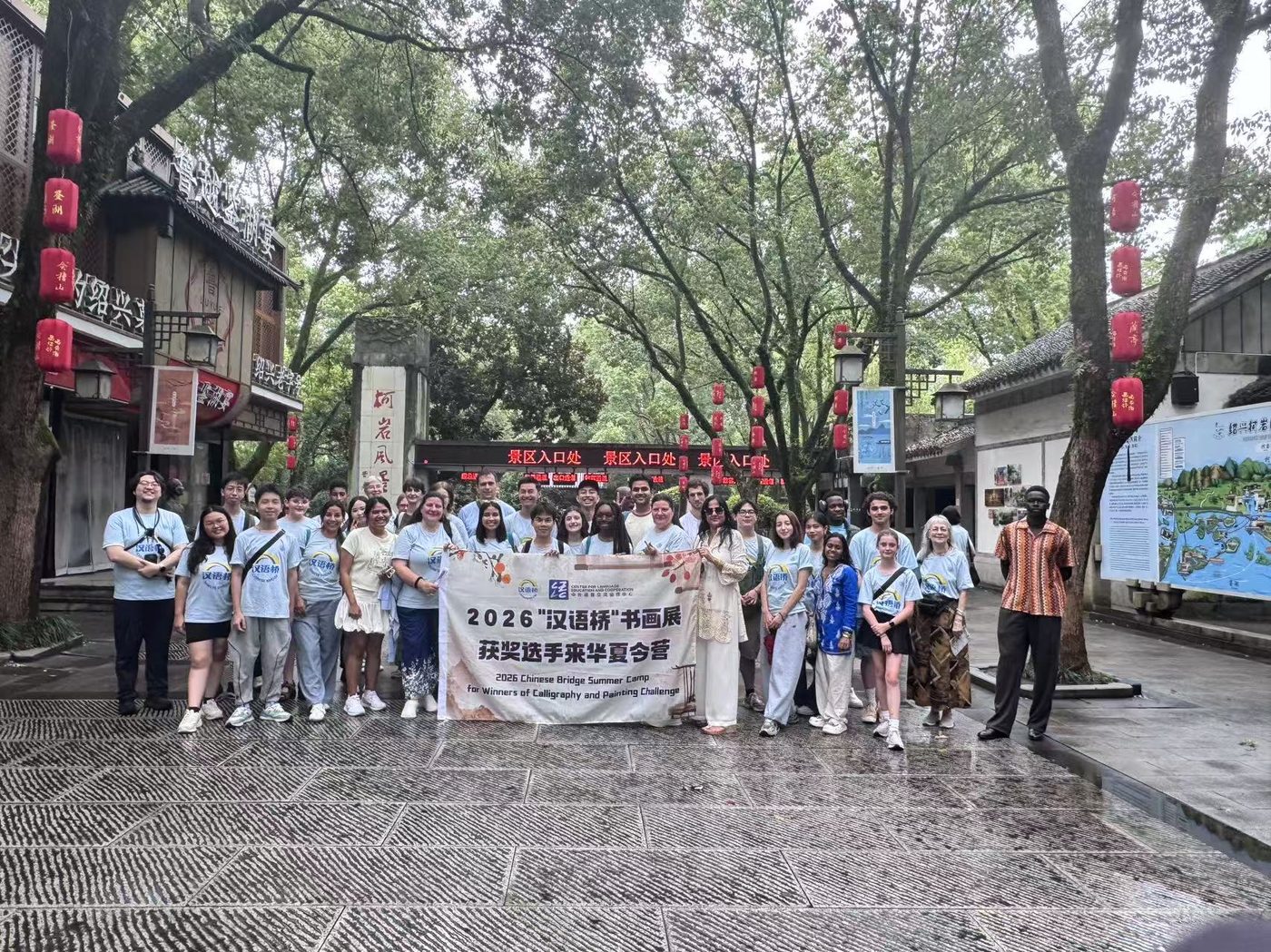
In Shaoxing, participants visited the Ke Yan scenic area to observe cliff-side inscriptions and stone carvings. Despite rainy weather, the group examined the weathered yet legible ancient characters, finding the concept of “jinshi qi” (the aesthetic weight of metal and stone) discussed in class to be particularly resonant when confronting the physical evidence of ancient stone art.
On August 12, the participants visited the Hu Wensui Art Gallery, where an exhibition of their previous award-winning works from 2026 "Chinese Bridge" Chinese Proficiency Competition for Foreigners across the Globe - Calligraphy and Painting Challenge Exhibition was displayed. Following the exhibition setup, participants created new works on-site. Local primary and secondary school students also visited the museum, facilitating a direct exchange between Chinese and international youth who engaged in discussions regarding brushstroke direction and artistic expression.
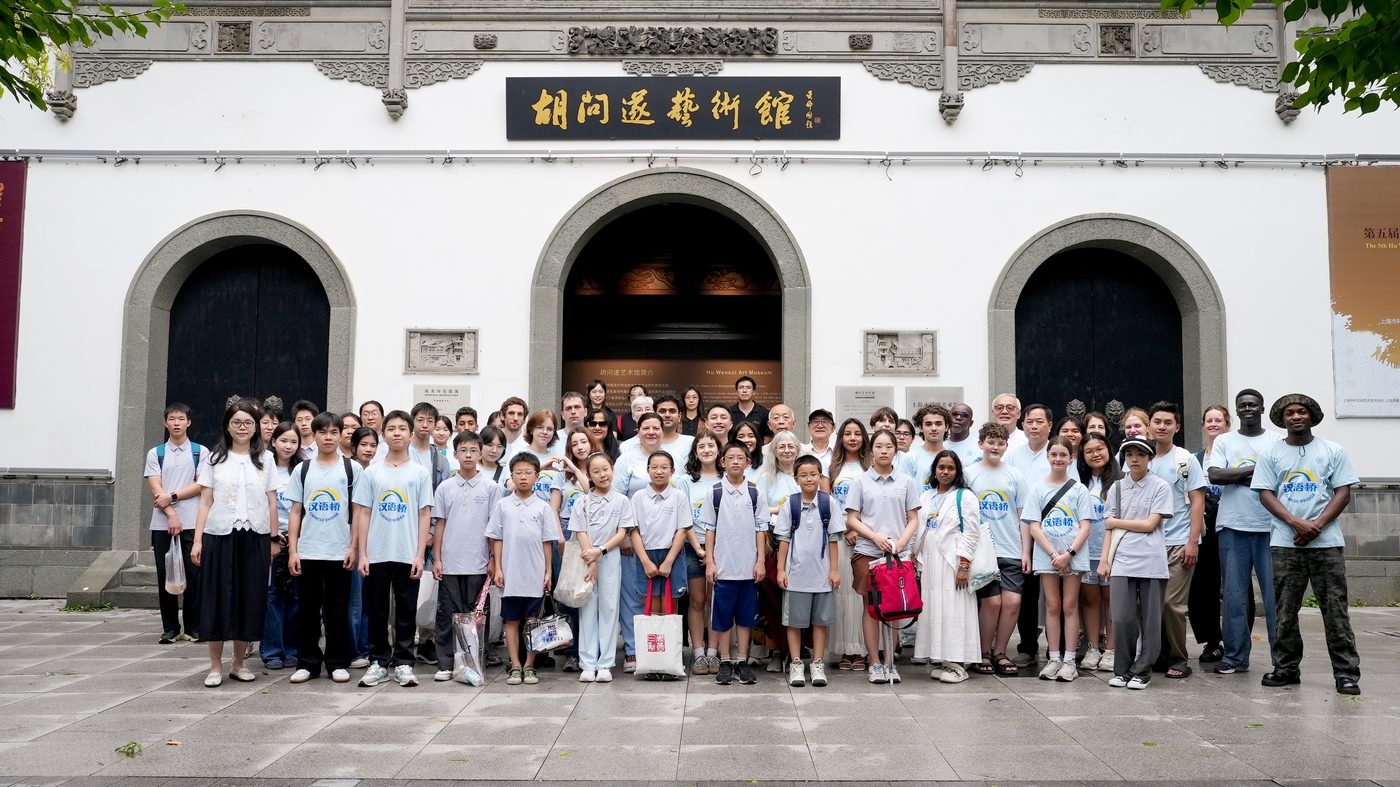
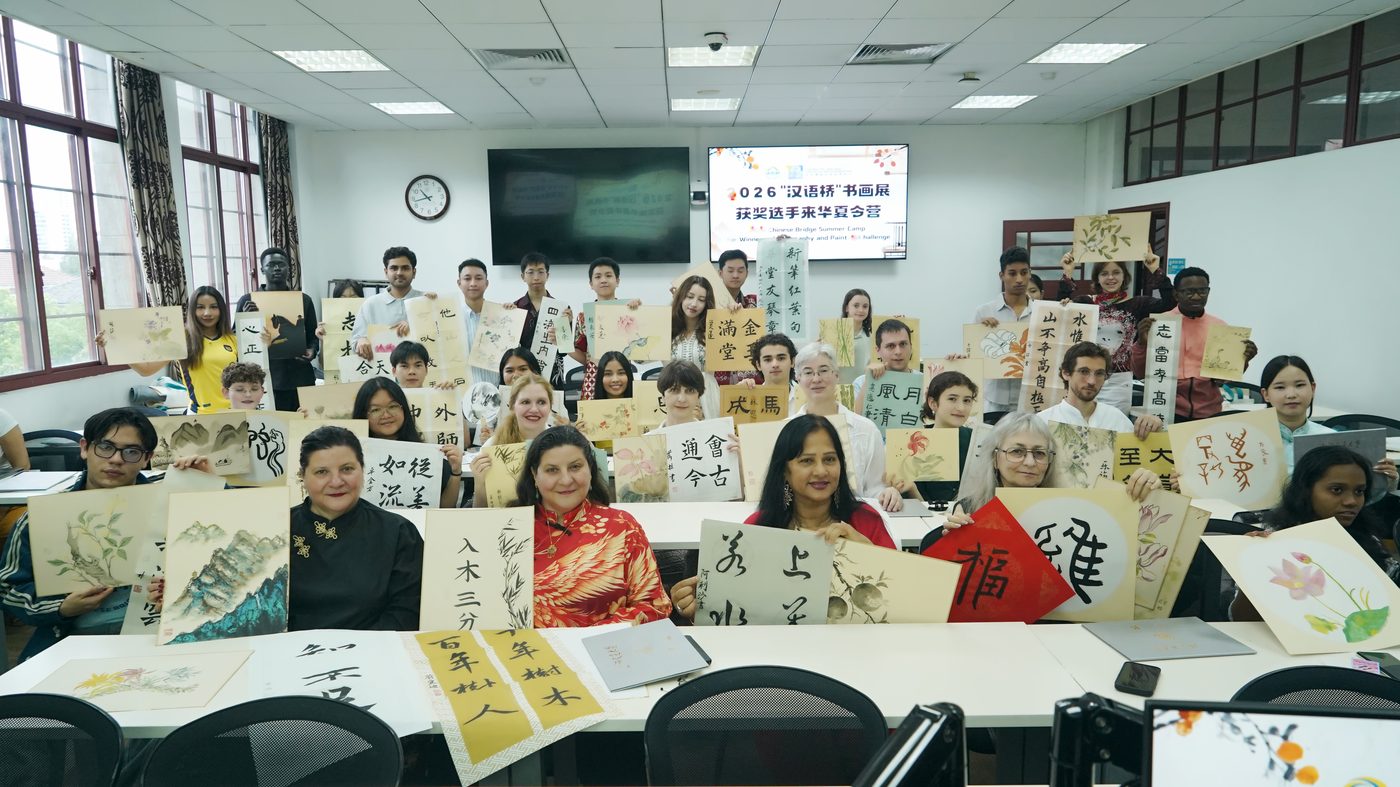
The closing ceremony was held on the morning of August 14. Ms. Mo Xiaoling, Assistant for the Dean of the School of Humanities, delivered the closing address, reflecting on the fourteen-day journey from technical training in the classroom to the final exhibition. She encouraged participants to carry this experience back to their home countries, emphasizing ink and brush as enduring mediums for cultural dialogue. Dressed in qipao, traditional ethnic attire, or formal wear, the participants received their completion certificates from SJTU faculty. The ceremony concluded with a group photograph holding their newly created artworks, which featured traditional phrases such as “The Supreme Good is Like Water” alongside paintings of lotus, orchids, and landscapes.
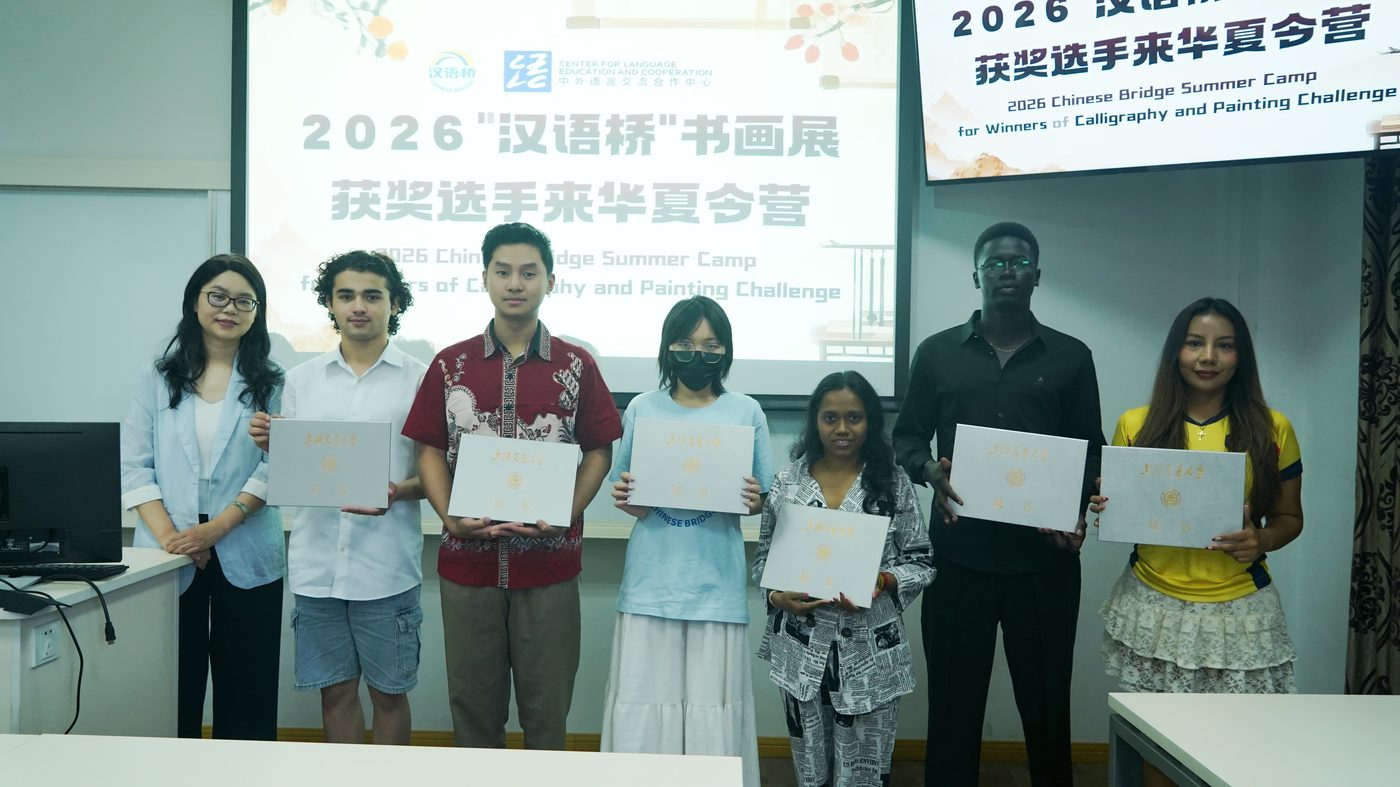
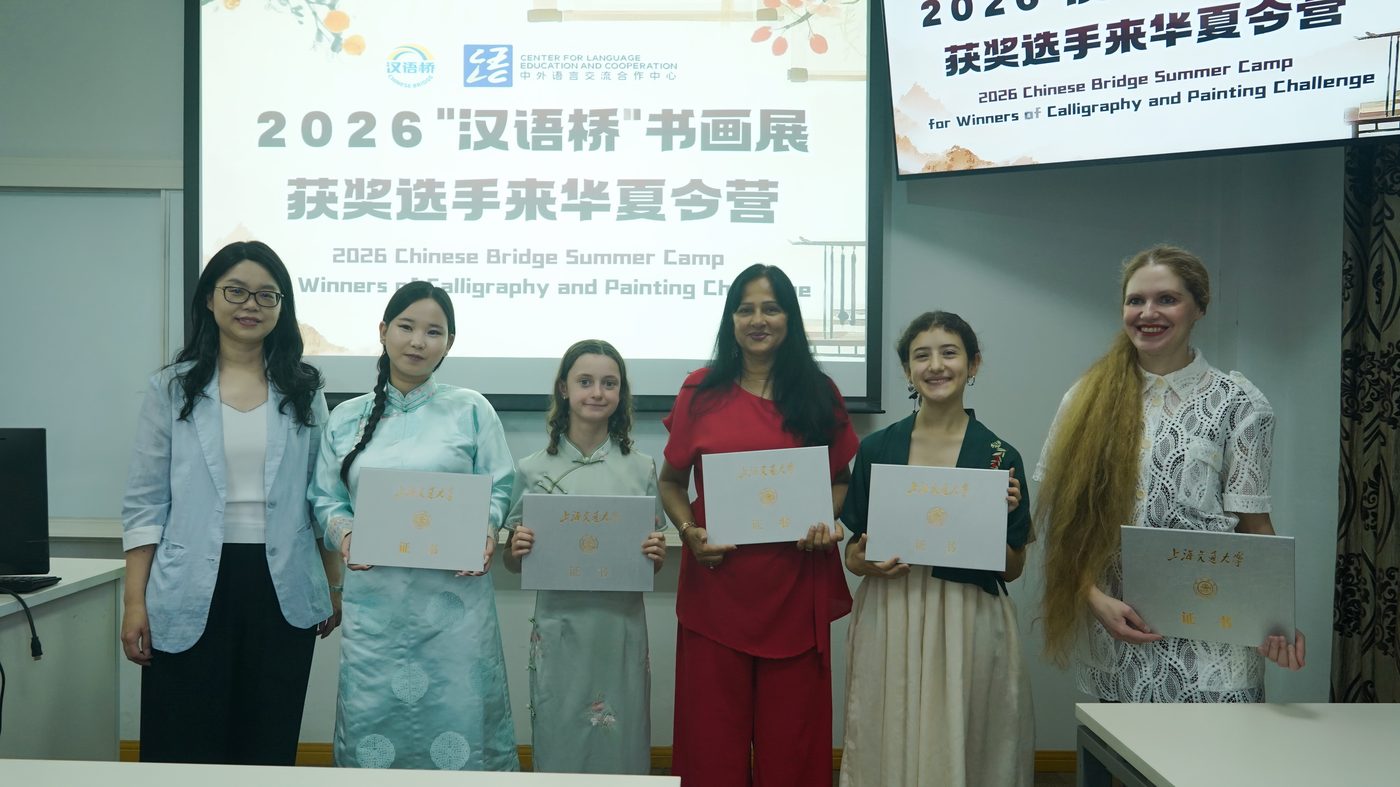
The camp comprised intensive calligraphy and painting courses, two specialized lectures, interactive cultural workshops, and a multi-city field study. The program underscored that language and art are not merely abstract knowledge to be recited, but experiential disciplines to be practiced and internalized. While the brushes are washed and the paper stored, the focus cultivated during the practice of ink and brush remains. It is hoped that this journey will serve as a lasting bridge, strengthening the cultural connection between the participants and China.
Address:
Minhang Campus: School of Humanities, 800 Dongchuan Road, Minhang District,Shanghai
Xuhui Campus: No. 1 Lecture Building, 1954 Huashan Road, Xuhui District, Shanghai
Tel:
Party and Administration Office: 86-21-34208525
Research and Development Office: 86-21-34206281
Academic Affairs Office: 86-21-34205651
International Office: 86-21-34206521/86-21-62932277
Student Affairs Office: 86-21-34205752
International Student Service Center: 86-21-62821015
Training Center: 85-21-62932801
交大HUMANITIES

交大汉语
Copyright @ 2016 Shanghai Jiao Tong University Address: No. 800, Dongchuan Road, Minhang District, Shanghai, P. R. China
